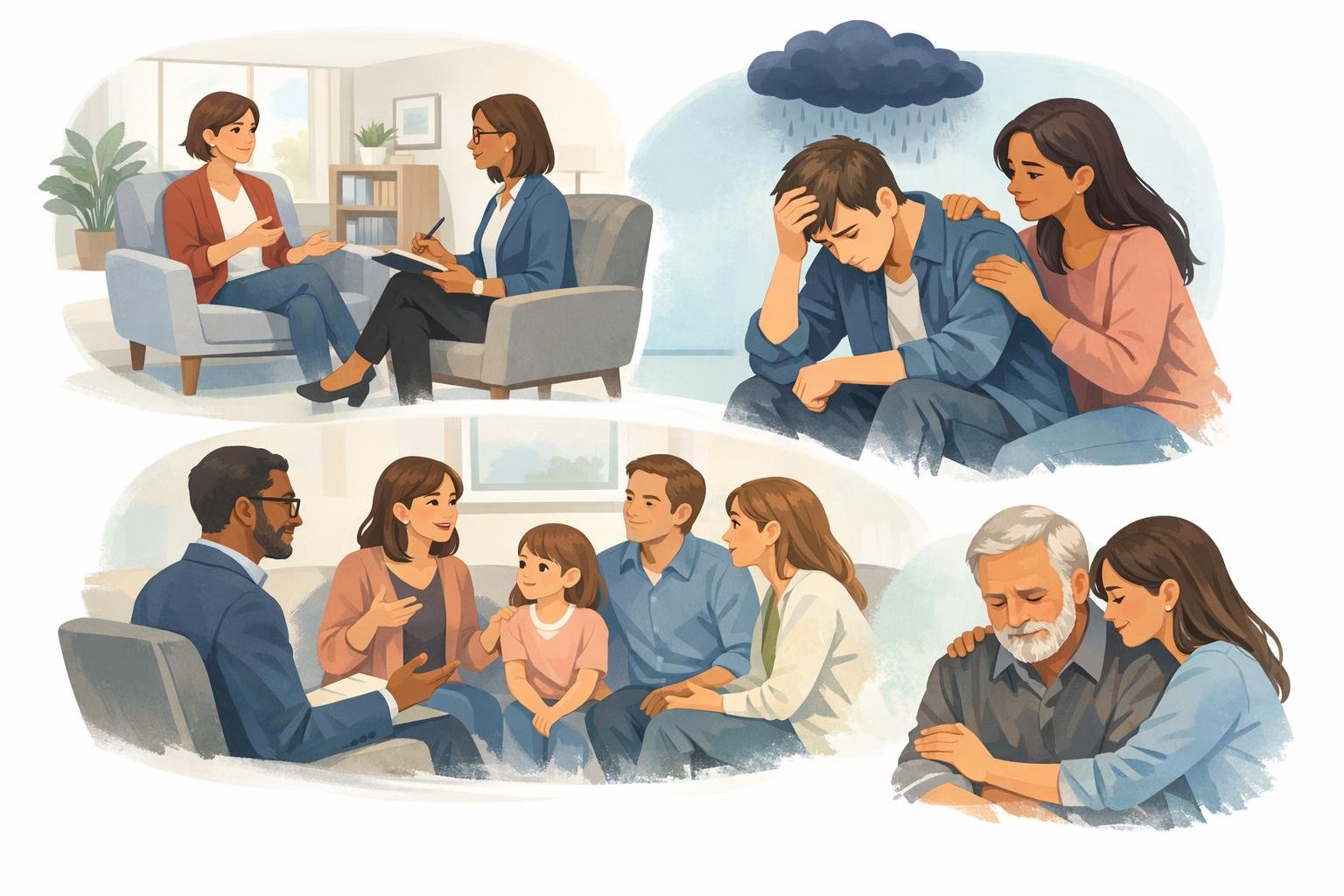
Support for specific life situations in Simcoe, Ontario
Why it matters
Some problems do not fit a general self-help plan. Divorce, grief, chronic pain, and work stress can affect sleep, focus, and relationships in very different ways. Getting the right kind of therapy and support in Simcoe early can prevent those pressures from spilling into every part of daily life.
Support for divorce and separation
Separation often brings more than sadness. It can also bring conflict about housing, finances, routines, and communication. In Simcoe, Ontario, that strain can build quickly when people try to settle everything at once.
A common mistake is treating every conversation like a final negotiation. That usually raises tension and makes co-parenting harder later. Focused support can help you separate legal issues from emotional reactions, so decisions are less likely to be driven by panic or anger.
Parenting stress and family dynamics
Parenting stress often shows up as short tempers, guilt, and constant second-guessing. Family tension can grow when one child needs more attention, schedules change, or parents are not aligned on rules.
The hard part is that stress in one relationship often spreads to the whole household. If it goes unchecked, children may react with withdrawal, defiance, or anxiety. Support can help parents set clearer boundaries, respond more consistently, and reduce repeated conflict patterns.
Workplace stress and career uncertainty
Work stress is not always about workload. It can come from job insecurity, conflict with a manager, burnout, or pressure to make a career change. These issues often affect concentration at home long before someone admits work is the cause.
One failure mode is pushing through until the body forces a stop. That can lead to sleep problems, irritability, and poor judgment. Practical support helps people sort out what is urgent, what is temporary, and what needs a real change in expectations or direction.
Coping with chronic illness or pain
Chronic illness and ongoing pain can shrink a person’s world. Plans become harder to keep, energy becomes less predictable, and other people may not understand the daily tradeoffs involved.
A common problem is setting goals based on good days only. That usually leads to frustration and a sense of failure when symptoms flare. In Simcoe, Ontario, support for chronic conditions often works best when it helps people pace activity, communicate limits clearly, and manage the emotional weight of symptoms that do not fully go away.
Anger management and emotional regulation
Anger is often a signal, not the whole issue. It may sit on top of stress, shame, fear, or feeling ignored. If the only goal is to suppress it, the pressure often returns in stronger ways.
The real work is learning what happens before the outburst. That includes body cues, thought patterns, and situations that lower control. Without that insight, people tend to apologize after the fact but repeat the same cycle under stress.
- Notice early signs like jaw tension, fast speech, or racing thoughts.
- Pause before texting, arguing, or making a decision that cannot be undone.
- Practice a replacement response, not just avoidance.
Support after bereavement
Grief does not move in a straight line. Some people feel numb first, then overwhelmed later. Others stay functional for months and struggle once daily routines quiet down.
A common mistake is judging grief by how it looks from the outside. That can make people hide normal reactions or feel guilty for not improving on a set timeline. Good support creates room for grief while also watching for isolation, depression, or a level of distress that starts to disrupt basic daily life.
If one of these situations is affecting your relationships, work, or ability to cope, the next useful step is specific support for that issue, not a vague plan to manage better on your own.